









Brazil’s National Monetary Council Resolution 5.298 marks a clear regulatory boundary for prediction markets such as Polymarket and Kalshi.
In this analysis, Carlos Akira Sato examines how the measure reflects a deeper shift in Brazil’s financial architecture, redefining what qualifies as a legitimate financial instrument and setting limits on the financialisation of non-economic events.
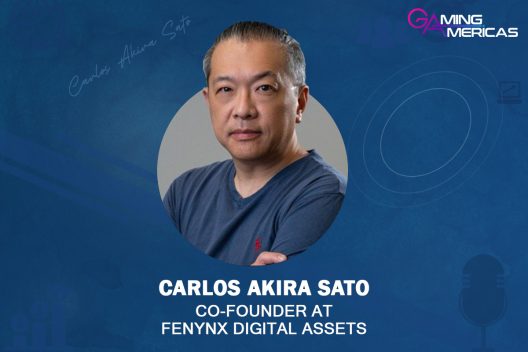
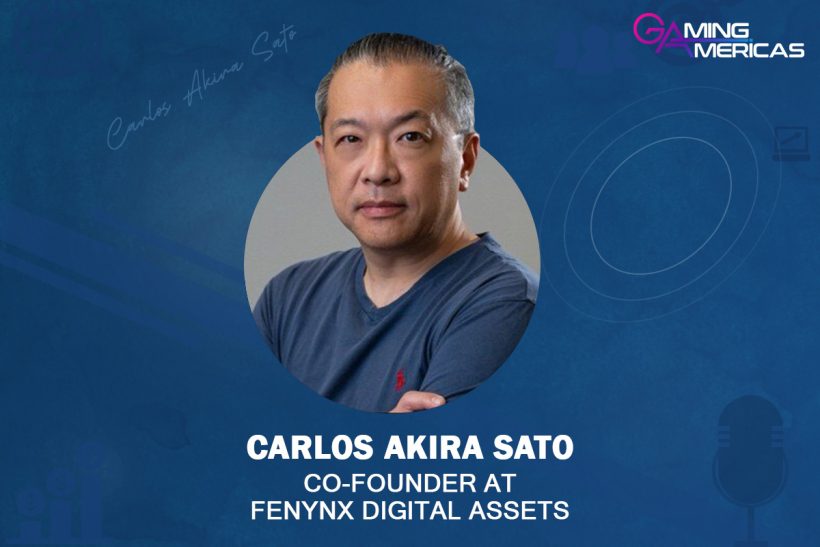
Carlos Akira Sato is co-founder of Fenynx Digital Assets and a specialist in regulated markets, financial infrastructure and responsible gambling.
In this op-ed, he argues that Brazil’s Resolution 5.298 is less about banning Polymarket and Kalshi than about defining the boundaries of the next generation of the financial system.
Brazil’s National Monetary Council Resolution 5.298 sets an unambiguous limit for platforms such as Polymarket and Kalshi in the country. The conclusion is straightforward: these models no longer find regulatory space in Brazil. But the significance of the decision lies not in the prohibition itself, it lies in what it reveals about the future of financial architecture.
Resolution 5.298 does not explicitly address prediction markets. It operates at a deeper level, redefining what can be considered a legitimate financial instrument. By requiring that contracts be tied to economic variables with objective price formation, the regulator eliminates the possibility of structuring instruments, however sophisticated in appearance, based on political, social or behavioural events. This is not a peripheral adjustment. It is a conceptual repositioning.
For years, platforms like Polymarket and Kalshi thrived precisely on ambiguity. They are not traditional bookmakers, nor do they fit neatly as derivatives exchanges. They operate in an intermediate territory, contracts based on probabilities, financial language and an implicit promise of efficient price discovery about the future. That grey zone was always their main asset, and their greatest regulatory risk. What Brazil has now done is eliminate it.
The most sophisticated aspect of the resolution lies in its design. The CMN did not target the technology, the format of the platforms, or their location. It targeted the essence: the nature of the risk being traded. In doing so, it made irrelevant whether the operation occurs through bilateral contracts, offshore platforms or blockchain-based protocols. If the risk is not economic, the contract is not admissible. It is a form of regulation that privileges substance over form — and is, for that reason, likely to prove more resilient.
This decision projects effects well beyond the gambling debate. It speaks directly to the discussion around tokenisation and the widely held idea in recent years that any event could be converted into a digital asset. Brazil signals the opposite. Innovation is welcome, but not unlimited. Tokenisation finds legitimacy when anchored in the real economy, credit, receivables, productive assets, and loses it when it attempts to capture behaviour, opinion or social events as the basis for trading.
It is at this point that the resolution also reveals an institutional tension. The normative text itself assigns to the CVM the responsibility of issuing complementary regulation. The choice is legally understandable, but institutionally questionable.
If the regulator’s own diagnosis recognises that these are hybrid instruments, moving between derivatives, securities and fundraising structures, the absence of a joint initiative from the outset is notable. The option for sequential regulation, with the CMN setting guidelines and the CVM filling in the detail, introduces a lag that may temporarily reopen the very grey zone it intends to close.
The paradox is evident. The resolution is sophisticated in attacking the economic essence of contracts, but fragments regulatory execution by distributing competencies non-simultaneously.
In an environment where financial innovation occurs at the intersection of different regimes, banking, capital markets and, in certain cases, gambling, coordination ceases to be desirable and becomes necessary. The lack of synchrony may generate divergent interpretations, legal uncertainty and, above all, residual arbitrage opportunities.
Even so, the core of the decision remains solid. By restricting what can be considered a financial asset, Brazil establishes a silent but powerful limit on the financialisation of reality. Not every event can be turned into a contract. Not every expectation can be converted into a price. And not everything that can be tokenised should necessarily be traded.
To say that Polymarket and Kalshi cannot operate in Brazil is therefore correct, but it is only the surface. What is at stake is the definition of boundaries for the next generation of the financial system. A system that will continue to incorporate technology and innovation, but that, at least in the Brazilian case, will remain anchored in the real economy. And in that process, the quality of coordination between regulators will be as decisive as the clarity of the rules themselves.
Carlos Akira Sato is co-founder of Fenynx Digital Assets and a specialist in regulated markets, financial infrastructure and responsible gambling. In this op-ed, he argues that Brazil’s Resolution 5.298 is less about banning Polymarket and Kalshi than about defining the boundaries of the next generation of the financial system.