






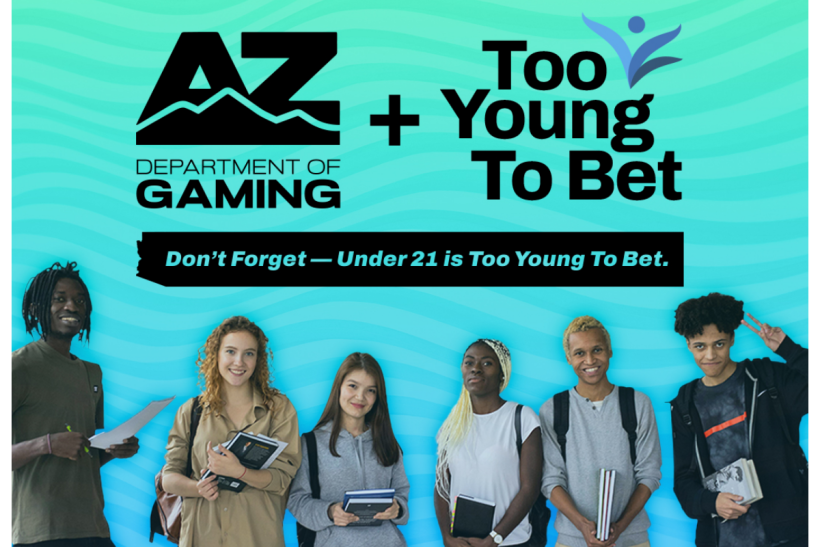

The goal is simple: Gambling in Arizona is 21+, and staying informed keeps young people safe.
The Arizona Department of Gaming (“ADG”) and its Division of Problem Gambling (“DPG”) announced the launch of Too Young to Bet AZ, the state’s first youth-focused public awareness initiative to prevent underage gambling. The campaign is part of a national effort led by the National Council on Problem Gambling (“NCPG”) to raise awareness about the risks of youth gambling and educate communities on the importance of keeping gambling activities separate from children.
The Arizona initiative reinforces that all gambling in Arizona is strictly for individuals 21 and older and promotes a clear message: no form of gambling is acceptable or safe for children. Our goal is to educate and equip the adults who guide youth and young adults, including caregivers, coaches, and educators, with information to help prevent early exposure to gambling.
Through this initiative, ADG and DPG will share resources highlighting underage gambling risks, guidance for families and educators, downloadable youth-focused materials, and community engagement opportunities statewide. The Division of Problem Gambling is available to deliver presentations, offer technical assistance, and provide no-cost curriculum that schools, youth-serving groups, and community organizations can integrate into their existing programs. In addition, a 24-hour helpline, 1-800-NEXT-STEP (1-800-639-8783), is available to confidentially connect callers with resources, including statewide treatment providers who specialize in problem gambling and financial counseling services.
The Department has launched a new website to amplify awareness and provide accurate information and resources to families and communities at Gaming.az.gov/TooYoungToBet
What Arizona Families Need to Know About Underage Gambling
Young people today encounter gambling-like activities through mobile apps, online games, advertising, and social media, often without recognizing the risks. According to NCPG, more than one in six adolescents has gambled in the past year, with many reporting their first gambling experience at age ten or younger. Many adults unintentionally introduce gambling through casual sports wagers, online games, or the gifting of lottery products. The good news is that research also shows that youth who talk openly with trusted adults about gambling are far less likely to develop gambling problems. Whether you are a parent, caregiver, educator, coach, mentor, or community leader, your voice matters.
Early exposure increases risk: Youth who gamble or encounter gambling-like activities face a higher risk for future gambling problems.
Simple conversations can make a real difference in preventing youth gambling: Ongoing conversations reduce risk, build awareness, and reinforce that gambling is for adults only.
Games and apps often mimic gambling: Popular games include casino-style features that blur age-appropriate boundaries.
Access is easier than ever: Phones, tablets, and online platforms expose youth to gambling ads, sports odds, and unregulated casino-style games that don’t have age verification.
Parents and caregivers may not see it: Monitoring devices, downloads, and in-app purchases can help identify early warning signs.
Prevention requires partnership: Families, schools, coaches, and community organizations all play a critical role in reinforcing that gambling in Arizona is for adults 21+ only.
“Youth gambling can take many forms, and it is a growing risk that families need to be aware of,” said Jackie Johnson, Director of the Arizona Department of Gaming. “This initiative helps the community understand that in Arizona, gambling is for adults 21 and older and how important it is to keep gambling products out of kids’ hands. We are proud to join this national effort led by the National Council for Problem Gambling and encourage organizations across Arizona to get involved and help protect young people from underage gambling.”
“Underage gambling is more common than many families realize,” said Elise Mikkelsen, Director of the Division of Problem Gambling. “As prevention increasingly depends on families, schools, and communities working together, this campaign provides practical tools and gives adults the information they need to recognize early signs and keep gambling where it belongs, with adults. Our team is here to help and ready to support families, schools, and youth-serving organizations across the state.”
Organizations across Arizona are encouraged to visit Gaming.az.gov/TooYoungToBet to download our toolkit, share campaign messaging on social media and in newsletters, distribute prevention materials, integrate underage gambling education into their current programming, and engage with the DPG team for additional support.
Together, we can protect Arizona’s youth by staying informed, increasing awareness of underage gambling risks, supporting responsible decisions, and ensuring families receive accurate, age-appropriate information.